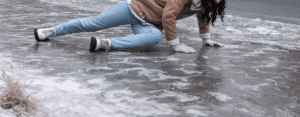

If you’ve slipped and fallen in a grocery store, the first minutes matter. Do these five things to protect your health and your claim: get medical care, report it to the store, photograph the hazard, collect witness names, and ask that surveillance video be preserved. Avoid recorded statements or sharing medical records until you’ve spoken with an attorney.
According to the National Floor Safety Institute (NFSI), falls account for over eight million emergency-room visits each year, and slip-and-fall events make up about 12% of all falls – nearly one million. In other words, these incidents are common—and preventable.
Steps To Take After an Accident
Grocery stores invite customers in and must keep aisles reasonably safe. When a preventable hazard–like a spill, leaking cooler, curled mat, cluttered pallet, or tracked-in rain/snow–causes injury, you may be entitled to compensation for medical bills, lost wages, and pain and suffering. Below, we outline exactly what to do next–and what to avoid–to strengthen your case from day one.
1. Get Medical Attention
- Get evaluated the same day. Go to the ER, urgent care, or your doctor. Call 911 for red-flag symptoms (head strike, loss of consciousness, severe pain, numbness/weakness, uncontrolled bleeding).
- Follow the treatment plan. Complete imaging, fill prescriptions, and attend follow-ups and therapy. Gaps in care are often used to argue that you weren’t seriously hurt and/or that your continued injury is due to your non-compliance with treatment.
- Document injuries and pain. Photograph visible injuries now and over the next few days/weeks (bruises evolve). Keep a daily pain/symptom journal, noting sleep issues, mobility limits, and activities you can’t do.
- Save every record and bill. Discharge papers, imaging results, doctor notes, work restrictions, and pharmacy receipts will be needed to support your claim.
According to the Centers for Disease Control and Prevention (CDC) and the Bureau of Labor Statistics (BLS), an estimated 20-30% of people who experience a slip and fall will suffer moderate to severe injuries, such as bruises, hip fractures, or head injuries.
Additionally, slip and fall accidents are the most common cause of traumatic brain injuries (TBI), and these account for 46% of fatal falls among older Americans (those sixty-five years of age and older).
2. Report Slip-and-Fall to Store
- Notify a manager immediately and request a written incident report.
- Verify essentials. Date/time, exact location (aisle number/endcap/entry), what caused the fall (spill, leak, curled mat, clutter), and where you feel pain.
- Ask about cameras and preservation. Confirm whether cameras cover the area and ask the store to preserve surveillance video and related records (at least one hour before and after your fall). Request a report/incident number and contact information.
- Keep statements short and factual. Don’t speculate, apologize, or accept any blame for the slip-and-fall. Don’t sign any report or agree to a recorded statement at the scene.
- If you must leave for medical care, do so – and follow up promptly with the store to document the incident and request preservation.
3. Document Evidence of Slip-and-Fall
- Get witness information. Collect names, phone numbers, and emails for anyone who saw the hazard or helped after. If someone arrived after the fall, note what they observed about the condition of the floor.
- Photograph & record video. Start with a wide shot for context (show aisle signage/endcap), then take medium and close-ups of the hazard (spill, leak, loose mat, product on floor) and any source (cooler, ceiling drip, container). Make sure to capture all visible injuries.
- Capture camera locations. Note where cameras are and which way they point; take a quick photo if possible.
- Write down what happened. Who you spoke with, what was said, the exact location, the weather (tracked-in rain/snow), and your symptoms as they developed.
- Keep a running log. Track appointments, costs, and how the injury limits work, sleep, childcare, and daily tasks.
4. Continue Medical Treatment
- Stick to the plan and avoid gaps. Attend every appointment and therapy session. If you must miss one, reschedule. Insurers often argue that gaps mean you weren’t seriously injured.
- Follow restrictions. Use braces, assistive devices, or modified duties as prescribed. Don’t “push through” the pain or return to heavy activity too soon.
- Track every expense. Keep bills, invoices, imaging (X-ray/MRI/CT), specialist visits, injections, physical therapy, and medications. Save receipts for medical devices (braces, splints, canes).
- Keep a symptom & function journal. Daily notes on pain (0-10), sleep, range of motion, headaches/dizziness, activities you can’t do (lifting, stairs, childcare, exercise). Note flare-ups and what triggers them.
5. Consult an Attorney
A prompt call can protect your rights. Stores often overwrite surveillance video and inspection logs within days; a lawyer can immediately send a preservation (spoliation) letter to secure footage, sweep records, maintenance tickets, vendor/stocking logs, and prior incident reports.
To succeed on a grocery store slip-and-fall, you generally must show: a duty of reasonable care and a breach (the store created the hazard or failed to fix/warn in time); causation (the hazard caused your fall and injuries, including any aggravation of pre-existing conditions); and damages. Example: Ice accumulates at the entry after a storm because mats weren’t placed; a shopper slips, fractures a forearm, and needs treatment and time off work – those facts can establish negligence, causation, and damages.
Your attorney will investigate the scene and policies, obtain video and logs, interview witnesses, coordinate medical billing and liens, and value the case for settlement – or file suit if needed. Compensation may include medical expenses, lost wages and loss of earning capacity, non-economic damages (pain and suffering, emotional distress, loss of enjoyment, scarring/disability), and–when permitted by the Court–punitive damages for egregious conduct.
What Not To Do After Your Accident
Avoid signing anything or giving a recorded statement at the scene of a slip and fall. Statements made in the moment can be incomplete or misconstrued, and signing documents without understanding them can waive rights or limit the store’s liability. Consult an attorney before providing any formal statement or signing any paperwork.
- Don’t leave without reporting the incident to the manager.
- Don’t apologize or accept blame.
- Don’t agree to a recorded statement.
- Don’t post about the fall or your injuries on social media.
- Don’t delay medical care or miss follow-ups; gaps in treatment weaken claims.
What To Do If There Are No Witnesses To Your Fall
Getting compensation after a slip-and-fall with no eyewitnesses requires a coordinated approach between you and your attorney. Here are the steps you should take to protect your rights:
- Get medical attention right away. Even if you feel okay, be evaluated by a medical professional. If you are seriously hurt, call 911 and wait for emergency responders.
- Report the incident immediately. If you can do so safely and without worsening your injury, locate a manager and make sure an incident report is created before you leave. If you must depart for medical care, contact the store as soon as possible, requesting that an incident report be completed and surveillance video preserved. Without witnesses or an incident report, your claim will become extremely difficult to prove.
- Photograph everything. Take wide, medium, and close-ups of the hazard; capture lighting conditions; and document all visible injuries.
- Call a lawyer. The earlier you do this, the better. An attorney can act quickly to secure time-sensitive evidence and guide what to say and what not to say.
After you’ve called Brown & Crouppen, we’ll begin working to maximize your chances of compensation by:
- Requesting and preserving security-camera footage. If you fell in a grocery store, there’s a good chance your fall was captured on camera. Surveillance footage isn’t kept forever, with footage being overwritten (deleted) within as little as a few days to as long as a few months, depending on the grocery store’s policy and storage capacity.
- Reviewing your medical records. Although receiving treatment for an injury that is consistent with a slip-and-fall on the day you claim to have been hurt isn’t hard evidence, it’s also hard to deny. That’s why getting immediate medical attention is critical.
- Interviewing emergency responders, store employees, and medical providers to corroborate what happened and identify additional evidence. If you were seriously injured and needed assistance at the scene, you were probably helped or at least seen by emergency responders and employees. All of these people can help corroborate your claim.
- Obtaining inspection logs, maintenance tickets, and prior incident reports.
Common Causes of Grocery Store Slip and Falls
A joint publication from the U.S. Department of Health & Human Services and the Centers for Disease Control and Prevention identifies frequent retail risk factors for slips, trips, and same-level falls, including:
- Spills and residues that make walking surfaces slick
- Tracked-in rain, snow, and ice that spreads moisture indoors
- Loose or curling mats/rugs and uneven transitions
- Stocking pallets, boxes, and displays that block sightlines or narrow aisles
- Poor or inconsistent lighting that reduces visibility
- Damaged or uneven flooring and height changes; clutter, cords, or hoses creating trip hazards.
Get Help With Your Grocery Store Slip And Fall Claim
At Brown & Crouppen Law Firm, our experienced attorneys are here to help you. We work on a contingency fee basis, meaning you pay nothing unless we win your case. With over $2 billion won in personal injury cases, we’re committed to achieving justice for our clients. We’ll help determine fault, build a strong claim, and fight for the compensation you deserve.
Getting started with your case is easy. Call us at 888-802-8156 for a free consultation or get help with your case online from our legal team.