
Being injured in a restaurant can take what is meant to be an enjoyable experience and turn it into a chaotic and unpleasant injury and recovery. Unfortunately, slip and fall accidents are common in restaurants due to spilled drinks, greasy floors, wet bathrooms, uneven entryways, and other hazards that can easily be overlooked during busy service.
If you slip and fall at a restaurant, act immediately. What you do in the moments and days afterward can make a major difference in your health and your ability to pursue compensation.
Steps to Take After a Slip and Fall in a Restaurant
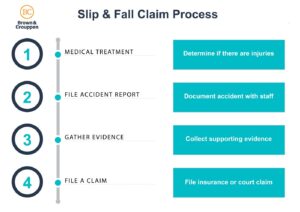
Get Medical Attention
Prioritize your health above all else. Even if you feel “okay” right after a fall, seek a medical evaluation promptly. Some injuries, like concussions, soft tissue damage, or internal injuries, may not show symptoms immediately. Waiting can make injuries worse. Act quickly to protect yourself now.
Example:
While dining at a restaurant, a 34-year-old woman slips on a wet tile near the restroom entrance and strikes her head against the wall. Feeling embarrassed and believing she is not seriously injured, she declines medical assistance at the scene and goes home. Over the next two days, she develops worsening headaches, dizziness, and blurred vision.
When she finally seeks medical care, she is diagnosed with a concussion. Prompt medical evaluation helps connect her symptoms to the fall and ensures the injury is properly documented. Early treatment also reduces the risk of complications and prevents insurers from arguing that the condition was unrelated or caused by another event.
Report the Accident to the Restaurant Manager
When you fall in any business, including restaurants, it means you are considered an invitee. This means that the owner owes you a higher duty of care to inspect for potential dangers and fix them in a reasonable time. If you fall in a restaurant, it is important to notify the manager immediately. Ask them whether an incident report can be created and whether any cameras captured the area of the fall, and request a copy if available. Avoid signing any waivers or releases without legal advice.
Make sure the time of the fall is recorded on the report. During peak lunch or dinner service, restaurants often have fewer opportunities to inspect floors. However, increased foot traffic also increases the likelihood that staff will notice hazards. Courts often consider whether inspection practices were reasonable given the restaurant’s level of activity at the time of the fall.
Example:
A customer slips on spilled soda by the drink station. The manager acknowledges the fall but does not file a report. Weeks later, the restaurant denies any knowledge of the incident, making it harder to prove.
Document and Collect Evidence of the Fall
Evidence can disappear quickly in restaurants. Spills get cleaned, mats are moved, and surveillance footage may be deleted within days. If you can, collect photos or videos of what caused your fall, images of any signs in the area, and the contact information of any witnesses. Because restaurants are typically high-traffic environments, there may be witnesses who saw the fall occur. If so, it is important to gather their contact information before leaving. Record their names and phone numbers and ask what they observed. Do not discuss your injuries or speculate about how or why the fall happened, as those details should be preserved through medical records and official documentation.
In one case we handled, the restaurant focused on whether there was a spill on the floor. The evidence ultimately showed that the fall was caused by a curled and unsecured floor mat that had been in place for months. The condition of the mat, rather than a temporary spill, became the central issue. This is why taking photos and seeking legal help immediately can help you fully assess your claim and focus on recovery.
Report the Restaurant Fall to Your Insurance Company
After a slip and fall at a restaurant, it is generally a good idea to notify your own insurance company that an accident occurred, particularly if you require medical treatment. Prompt reporting ensures there is a record of when and how the injury occurred.
At the same time, you should be cautious if the restaurant’s insurance company contacts you. It is common for an adjuster to reach out shortly after an incident and request a recorded statement or ask detailed questions about the fall. These conversations are often framed as routine, but the information provided can later be used to minimize or deny a claim.
If you speak with an insurance representative, limit your discussion to basic facts such as the date, time, and location of the fall. Avoid speculating about fault, downplaying your injuries, or making statements before you understand the full extent of your condition. Declining a recorded statement until you have had an opportunity to seek legal advice is often advisable.
Keep Up with Medical Treatment and Doctor’s Visits
After a slip and fall at a restaurant, consistent medical care is one of the most important steps in protecting both your health and your claim. Insurance companies closely review medical records when deciding whether to accept or deny liability, and they often focus on whether treatment supports the seriousness of the injury.
Gaps in care are commonly used as a defense. When appointments are missed or treatment stops prematurely, insurers frequently argue that the injuries were minor, resolved quickly, or were not caused by the fall at all.
Example:
A 47-year-old man slips on a greasy floor near the kitchen entrance and injures his shoulder. He visits the emergency room the same day but does not follow up with physical therapy because the pain “comes and goes.” Weeks later, the insurance company argues the injury must not have been serious due to the lack of ongoing treatment, despite continued pain and limited mobility.
Medical treatment helps establish a clear timeline connecting the hazardous condition to your injuries and shows how those injuries affect your daily life. Each visit, diagnosis, and recommendation creates documentation that insurance companies and juries rely on to evaluate what you have endured.
It is also important to be clear and consistent when speaking with medical providers. Explain exactly how the injury occurred, what symptoms you are experiencing, and how the pain affects your ability to work, sleep, or perform routine activities. Some people find it helpful to keep a small notebook or notes app to track pain levels, flare-ups, and daily limitations. Over time, this combination of prompt medical care and consistent documentation paints a clear picture of how the slip and fall has impacted your health, work, and quality of life.
Consult an Attorney
Restaurant slip-and-fall cases are based on negligence, and proving negligence requires specific elements. An experienced attorney can evaluate whether those elements exist and gather evidence to support them.
To succeed, your attorney typically must prove:
1. Duty of Care. Restaurants owe customers a duty to keep the premises reasonably safe.
Example: A new Italian place opens and invites customers to dine indoors, creating a legal duty to maintain safe walking surfaces and ensure that no potential dangers pose a risk of injury.
2. Breach of Duty. The restaurant failed to act reasonably under the circumstances.
Example: Employees were aware that kitchen floor grease was being tracked into the dining area, but they failed to mop or place warning signs. A customer walking to their table later slipped on it.
3. Notice. The restaurant knew or should have known about the hazard.
Example: Staff complained earlier in the shift about a leaking ice machine that caused repeated puddles near the bar, or a spill was left uncleaned for several hours, and multiple employees walked by it without cleaning it or putting up a warning sign.
4. Causation. The unsafe condition directly caused the fall.
Example: A 38-year-old woman slips on a slippery restaurant floor and falls directly onto her right side. She has a history of occasional lower back pain, but had never experienced shoulder problems before the fall. After seeking medical care, her doctor documents that the shoulder pain began immediately following the incident, notes decreased range of motion, and orders imaging that confirms a rotator cuff tear. The medical records also indicate that her prior back symptoms did not worsen. By distinguishing the new shoulder injury from pre-existing back pain, the physician’s documentation helps establish that the fall directly caused a new injury rather than a continuation of an old condition.
5. Damages. The fall resulted in real injuries and losses. You can recover for all medical bills, future medical expenses for ongoing treatment, lost wages, loss of future earning capacity, if you’re unable to return to your job, and pain and suffering from the injury and recovery.
What Not to Do After Your Accident
1. Do not sign documents or give recorded statements without understanding their purpose
After an accident, restaurants or their insurance companies may ask you to sign incident reports, medical authorizations, or settlement paperwork. These documents can sometimes limit your ability to pursue a claim or give insurers broad access to unrelated medical history. Recorded statements are often used to lock injured individuals into early versions of events before the full extent of their injuries is known. Once a statement is given or a document is signed, it can be difficult to undo.
2. Do not leave the scene without reporting the incident or altering the area where you fell
If a slip-and-fall incident is not reported to restaurant management, the business may later claim it never occurred. Leaving without notice also increases the likelihood that important evidence (such as surveillance footage, cleaning logs, or employee reports) can be lost.
At the same time, avoid cleaning up the area or moving items involved in the fall. Many people instinctively wipe up a spill or straighten a floor mat out of embarrassment or a desire to be helpful. While understandable, altering the scene can eliminate critical evidence showing what caused the fall and how the hazardous condition existed at the time of the incident.
3. Do not rely on the restaurant to preserve evidence for you
Surveillance footage, inspection logs, and employee statements may be overwritten or discarded unless steps are taken to preserve them. Assuming the restaurant will keep this evidence can be a costly mistake. Requesting the footage from the restaurant will help ensure the correct video evidence is preserved.
4. Do not delay medical treatment or ignore worsening symptoms
Going to the hospital and seeing doctors can be a hassle. Recovery from medical treatments can be an annoyance and painful. However, your health should be your top priority to ensure you heal properly. Waiting too long to seek care gives insurers an opening to argue that your injuries were minor or unrelated to the fall. Delayed treatment can also make recovery more difficult.
5. Do not skip follow-up appointments or stop treatment early
On a similar note, gaps in care are frequently used to argue that injuries were either resolved or exaggerated. Consistent treatment helps show the true impact of the fall.
6. Do not wait too long to seek legal advice
Delays can lead to lost evidence, fading witness memories, and missed deadlines. Many people assume they have plenty of time to handle a slip-and-fall claim, especially if their injuries do not seem severe right away. While it is true that the law allows a certain amount of time to file a lawsuit, waiting too long to speak with an attorney can make a claim much harder to prove.
This legal deadline is called the statute of limitations. In Missouri, negligence claims, such as slip-and-fall accidents, have a five-year statute of limitations (Mo. Rev. Stat. § 516.120). This means that, from the date of your injury, an individual has five years to seek an attorney and file the claim. In Illinois and Kansas, the statute of limitations is two years from the date of your injury. Once this deadline passes, the right to pursue compensation is typically lost, regardless of how strong the underlying claim may be.
However, these deadlines should not be mistaken for a reason to delay. The most important work in a slip-and-fall case often happens early. The sooner an attorney is involved, the sooner steps can be taken to investigate the accident, identify responsible parties, and preserve critical evidence.
Example:
A customer slips on a wet restaurant floor near the drink station and injures his knee. He reports the fall but does not contact an attorney for several months, believing he has time to do so. By the time legal counsel becomes involved, the restaurant’s surveillance footage has been automatically overwritten, the cleaning logs are no longer available, and the employee who worked that shift has left the restaurant. The restaurant then denies knowing how long the spill was on the floor, making the claim much harder to prove.
Hiring an attorney early allows important steps to be taken while evidence still exists. This includes sending preservation letters, securing video footage, obtaining maintenance and inspection records, and identifying witnesses before memories fade or employees move on.
For example, if a customer slipped on a water spill outside a restroom, but the business’s cleaning schedule showed a long gap in inspections, that record could help prove the property failed to take reasonable steps to prevent the accident.
How to Handle a Slip and Fall Without Witnesses
Do not worry, not every fall happens in front of others. A lack of witnesses does not automatically defeat a claim.
Helpful evidence may include:
- Surveillance footage
- Incident reports
- Cleaning logs
- Prior complaints
- Medical records showing immediate injury
Example:
A diner slips and falls while exiting a restaurant restroom during a time when there were not a lot of other patrons. No other customers are present at the time of the fall, and there are no immediate witnesses. The diner reports the incident to management, who later claim there is no way to know how long the floor was wet.
During the investigation, the restaurant’s cleaning and inspection logs show that the restroom had not been checked for over an hour, despite company policy requiring regular inspections during peak service times. When combined with evidence of tracked-in water and the time of day, the logs support the conclusion that the hazardous condition persisted long enough for the restaurant to have discovered and addressed it.
Get Help from a Personal Injury Attorney at Brown & Crouppen
When dealing with a slip and fall at a restaurant claim, it is crucial to consult with an experienced attorney who can guide and advise you through the claim. Early legal intervention can help protect your rights and improve your chances of compensation.
Our legal team is here to help you learn more about your legal options and evaluate the strength of your slip & fall claim. We care about our community and have dedicated our practice to helping injury victims recover justice, accountability, and compensation.
Get started today with your free case evaluation online or by calling us at (314) 501-9510. Our St. Louis and Kansas City personal injury lawyers have helped clients recover over $1 billion in settlements and verdicts. And remember, there are no upfront costs or legal fees – we only get paid if you win.