
Are Motorcycle Passengers Entitled to Compensation in Missouri?
Passengers Are Not Liable for the Rider's Negligence
According to the National Highway Traffic Safety Administration (NHTSA), 6,335 motorcyclists were killed in traffic crashes in 2023, representing 15% of all traffic fatalities nationwide. NHTSA also estimated that 82,564 motorcyclists were injured in crashes that year.
Passengers may hesitate to file a claim if the rider is a friend, family member, or coworker. However, injury claims are typically resolved through insurance, not by holding someone you know personally responsible. A passenger has no control over the motorcycle. They do not determine speed, lane changes, braking, or yielding. If the rider was at fault, that conduct should not automatically be imputed to the passenger.
As a passenger, ensure you are wearing a helmet, as is the driver. Chapter 302 of the Missouri Revised Statutes requires every motorcycle driver and passenger to always wear approved protective headgear while riding a motorcycle. In a crash without one, you are five times more likely to suffer serious head injury than a helmeted rider.
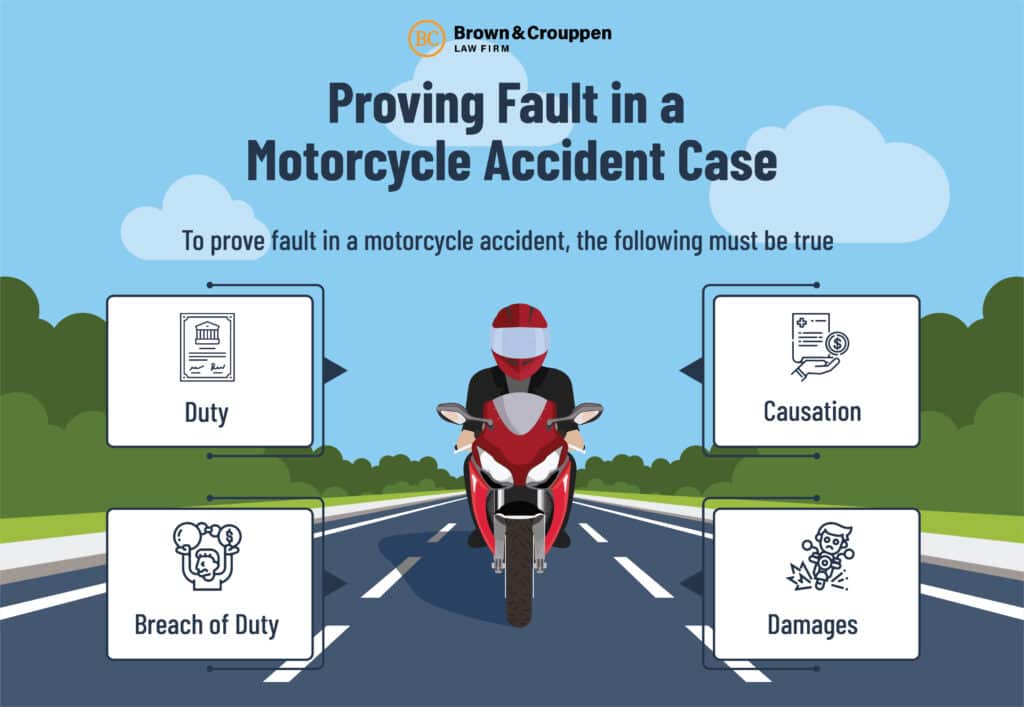
Missouri law also plays a key role in protecting injured passengers. Missouri law requires drivers to exercise the highest degree of care. RSMo § 304.012 states that drivers must be careful and prudent and not endanger others. If a driver fails this duty and causes a crash, they can be held legally and civilly responsible. Passengers who are not operating the vehicle are rarely held liable, making their claims stronger under Missouri law.

Missouri's Pure Comparative Fault Rule and What It Means for You
Missouri follows pure comparative fault, which allows fault to be divided among the people involved. A person’s compensation can be reduced by their own percentage of fault, but a passenger is not penalized simply because the rider made a mistake. Missouri’s pure comparative fault system was adopted by the Missouri Supreme Court in Gustafson v. Benda.
Missouri law also helps prevent anti-motorcycle bias. Under RSMo § 537.055, the fact that a party was operating a motorcycle cannot, by itself, be treated as evidence of comparative negligence.
A common misunderstanding after motorcycle crashes is that the passenger is “stuck” with whatever happened because they chose to ride with the motorcycle operator. In reality, the claim often changes once the crash is investigated. For example, in our experience, it’s common that a passenger may initially think the rider’s mistake ends the case, but the evidence may show another driver failed to yield, a second policy applies, or the rider’s insurance is available for the passenger’s injuries. Sorting out fault is not about blaming the passenger for being there; it is about identifying who actually caused the crash and what coverage exists.
Who Can Be Held Liable for a Motorcycle Passenger's Injuries?
Per vehicle miles traveled fatality rate in 2024, motorcyclists were almost 27 times more likely than passenger car occupants to die in a motor vehicle crash and were almost 5 times more likely to be injured. Safe motorcycling takes balance, coordination, and good judgment.
Determining who caused the crash is one of the most important parts of a motorcycle passenger injury claim in Missouri. Depending on the facts, several parties may be responsible.
The Motorcycle Rider
If the rider caused the crash, the passenger may have a claim against the rider’s insurance policy. This may apply if the rider was speeding, intoxicated, following too closely, taking a curve too fast, or otherwise failing to control the motorcycle. This can feel uncomfortable when the rider is someone close to you, but insurance exists for this reason.
Another Driver Who Caused the Crash
Many motorcycle crashes are caused by other drivers who fail to see the motorcycle or follow traffic laws. A passenger may have a claim against a driver who turned left in front of the motorcycle, changed lanes without checking blind spots, rear-ended the bike, ran a red light, or drove while distracted.
Example:
A common example is when a car turns left in front of an oncoming motorcycle at an intersection. The motorcycle rider may not have enough time to avoid the collision, and the passenger can be thrown from the bike or suffer serious impact injuries.
When Both Are at Fault — Filing Claims Against Multiple Parties
Sometimes the rider and another driver both share fault. In that situation, the passenger’s claim should not be limited to one insurance policy if more than one party caused the crash. This can be especially important when one party has minimal insurance.
In some cases, the best recovery comes from identifying all available coverage, including the rider’s policy, another driver’s policy, and uninsured or underinsured motorist coverage. Missouri law requires uninsured motorist coverage in certain automobile liability policies for people legally entitled to recover damages from uninsured motorists.
If the at-fault driver does not have insurance, or does not have enough insurance to cover the passenger’s damages, other coverage may be available. This may include uninsured motorist coverage, underinsured motorist coverage, or other applicable insurance policies. An attorney can help identify all possible sources of recovery.
Example:
Sometimes more than one person contributes to the crash. For instance, another driver may have pulled out in front of the motorcycle, but the motorcycle rider may also have been speeding. In that situation, the injured passenger may be able to pursue claims against both the other driver’s insurance and the motorcycle rider’s insurance.
Other Liable Parties: Road Defects, Defective Equipment, Dram Shop
Example:
Not every motorcycle passenger injury claim involves only the rider and another driver. For example, if a passenger is injured after the motorcycle hits a large pothole, loose gravel, missing signage, construction debris, or another dangerous roadway condition, a government entity, road contractor, or maintenance company may be responsible for any of the injuries sustained.
If defective brakes, tires, handlebars, or another motorcycle part caused the crash, the manufacturer, mechanic, or repair shop may be liable. In limited cases, if a bar or restaurant overserved alcohol to someone who later caused the crash, a dram shop claim may also be possible.
In alcohol-related motorcycle crashes, liability may extend beyond the impaired driver in limited circumstances. Missouri dram shop law can allow a claim against a bar, restaurant, or other licensed alcohol seller if it knowingly served alcohol to a visibly intoxicated person or someone under 21 who later caused harm. Brown & Crouppen has handled drunk driving injury cases, including a $450,000 settlement for a Missouri client injured by a drunk driver, but whether a separate dram shop claim exists depends on the facts of the case.
Use our guide to understand key legal considerations and what to do after a motorcycle accident.
What Compensation Can a Motorcycle Passenger Recover?
As a passenger injured in a crash, you may be eligible for a variety of damages, including:
- Medical Expenses
- Lost Wages
- Pain and Suffering
- Emotional Distress
- Permanent disability
- Loss of normal life and enjoyment of activities
The value of a claim depends on the severity of the injuries, available insurance coverage, medical treatment, and how the crash affects the injured person’s life. Compensation may include medical bills, ambulance expenses, emergency care, surgery, physical therapy, medication, and future care.
Passengers may also be able to recover lost wages if they miss work. If the injuries affect their ability to work in the future, the claim may include loss of earning capacity.
Pain and suffering are another important part of many claims. Motorcycle crashes can cause broken bones, road rashes, traumatic brain injuries, spinal injuries, scarring, anxiety, and loss of independence.
Example:
A motorcycle passenger is injured when another driver turns left in front of the motorcycle at an intersection. The passenger is thrown from the bike and suffers a fractured leg, road rash, and back pain. After the crash, they need emergency medical treatment, follow-up appointments, physical therapy, and time away from work while they recover. In that situation, the passenger may be able to recover compensation for:
- Medical expenses, including ambulance bills, hospital care, surgery, medication, physical therapy, and future treatment.
- Lost wages, if the passenger misses work because of the injury.
- Loss of earning capacity, if the injury affects their ability to return to the same job or work the same hours.
- Pain and suffering, including physical pain, emotional distress, scarring, anxiety, and loss of enjoyment of daily activities.
- Out-of-pocket expenses, such as transportation to medical appointments, medical equipment, or help with household tasks during recovery.
Why Motorcycle Passengers Should Have Their Own Attorney
A motorcycle passenger should consider having their own attorney, even if the rider already has one. The rider’s interests may not be the same as the passenger’s, especially if the rider may be partially at fault. Insurance companies may also try to treat everyone injured in the crash as one group, which can create problems when multiple people are hurt and coverage is limited.
Example:
A passenger is injured while riding on the back of a motorcycle driven by a friend. Another driver changes lanes without looking and hits the motorcycle, but the investigation also shows that the motorcycle rider may have been speeding. In that situation, the passengers’ claim may involve both the other driver’s insurance and the rider’s insurance.
This is a situation in which having a separate attorney matter. The rider’s attorney may be focused on proving the other driver was entirely at fault, while the passenger’s attorney is focused only on protecting the passenger’s right to recover full compensation from every available source.
How Long Do You Have to File a Claim in Missouri?
In Missouri, many personal injury lawsuits must be filed within five years, including actions for injury to a person or their rights. Speaking with an attorney early can help preserve evidence and protect your claim.
Frequently Asked Questions
Yes. If the motorcycle rider caused or contributed to the crash, the passenger may be able to file a claim through the rider’s insurance policy. This can feel uncomfortable when the rider is a friend or family member, but the claim is usually handled by insurance rather than paid directly by the rider.
It can, depending on the facts of the case. Missouri law requires motorcycle passengers under age 26 to wear approved protective headgear while the motorcycle is in motion. Insurance companies may argue that not wearing a helmet contributed to certain injuries, especially head injuries, but it does not automatically prevent a passenger from seeking compensation.
Get Help from A Personal Injury Attorney at Brown & Crouppen
When dealing with a personal injury insurance claim, it is crucial to consult with an experienced attorney who can guide and advise you through the claim. Early legal intervention can help protect your rights and improve your chances of compensation. The choice of a lawyer is an important one and should not be decided without careful consideration.
Our legal team is here to help you learn more about your legal options and evaluate the strength of your accident claim. We care about our community and have dedicated our practice to helping injury victims recover justice, accountability, and compensation.
Get started today with your free case evaluation by visiting Brown & Crouppen online or by calling us at (314) 501-9510. Our St. Louis and Kansas City personal injury lawyers have helped clients recover over $1 billion in settlements and verdicts. And remember, there are no upfront costs or legal fees – we only get paid if you win.