
The biggest difference between workers’ compensation and personal injury law is fault: Workers’ comp provides benefits for work-related injuries regardless of who caused them, while a personal injury claim requires proof that someone else’s negligence caused your harm.
That distinction affects nearly every part of the case, including who pays, what compensation may be available, and where the claim is filed. In some situations, an injured person may even have both a workers’ compensation claim and a personal injury case arising from the same incident.
An attorney can evaluate the facts, identify which legal path applies, and determine whether a third-party claim may also exist.
Quick Answer: What's the Difference Between Workers' Compensation and a Personal Injury Claim?
Key Takeaways for Workers' Compensation and Personal Injury Differences
- Workers’ comp doesn’t require one party to be at fault, but a personal injury claim does.
- Workers’ comp covers job injuries, while personal injury covers most other injuries caused by someone’s carelessness.
- Personal injury cases can pay for pain and suffering, while workers’ comp doesn’t.
- You can sometimes file both kinds of claims for the same accident.
- Missouri and Illinois have their own rules, deadlines, and offices for each kind of case.

The Real Differences Between Workers' Comp and Personal Injury Claims
Workers’ compensation and personal injury claims follow different rules, including your filing deadline, who’s responsible, and the types of compensation you can recover. Workers’ comp usually covers job-related injuries without requiring proof of fault. A personal injury claim usually requires proof that someone else’s negligence caused the harm.
Issue | Workers’ Compensation | Personal Injury |
Fault | You don’t have to prove fault. | You must show that someone else’s carelessness caused the injury. |
When It Applies | It covers injuries that happen while doing your job, such as a back injury at a warehouse or a repetitive stress injury in an office building. | It applies when another person or business causes harm, such as an auto accident with a distracted driver or a fall at a restaurant. |
Who Pays | Your employer’s workers’ compensation insurance usually pays covered benefits. | The at-fault party’s insurance company usually pays if the claim succeeds. |
What It Can Cover | It may cover authorized medical care, part of your lost wages, and disability benefits. | It may cover medical expenses, lost income, pain and suffering, and other damages. |
Pain and Suffering | Workers’ comp usually doesn’t address pain and suffering. | Personal injury claims can include pain and suffering when the evidence supports it. |
Deadlines | Workers’ comp has notice and claim-filing deadlines that vary by state. | Personal injury cases follow civil statutes of limitations. |
Where Your Case Goes | The claim usually moves through the state workers’ compensation agency. | The case is usually negotiated between your lawyer and the insurer, but may proceed in a local court. |
Workers' Compensation Is the Exclusive Remedy
Workers’ compensation is usually the exclusive remedy for employees hurt on the job. That means you generally cannot sue your employer for negligence, even if the employer’s mistake helped cause the injury.
There are rare exceptions; an experienced workers’ compensation lawyer can review the facts and explain what claims may apply.
Can You File Workers' Comp and a Personal Injury Claim at the Same Time?
You can sometimes file both a workers’ comp case and a personal injury claim for the same injury. That happens when someone other than your employer caused the harm, even though you were on the job at the time. These overlap cases are more common than folks think.
Some common third-party claim situations include:
- Auto Crashes During Work: A driver is hit by another motorist while making deliveries for their employer or driving between job sites.
- Defective Equipment: A worker gets hurt during their shift by a poorly made tool or machine from another company.
- Subcontractor Errors: A construction worker gets injured by a different contractor’s careless act on the same job site.
- Slip and Falls: A worker gets hurt at a customer’s store, hotel, or warehouse during a job task.
- Toxic Exposure: When chemicals or materials sold by an outside maker affect your health, you may be able to file two claims.
Running both claims together takes care. Some of the money from the personal injury case may need to be paid back to the workers’ comp insurer, which is called a lien or subrogation. Your workers’ comp attorney looks at the math and tries to keep as much in your pocket as possible.
Potential Compensation in Workers' Compensation and Personal Injury Cases
Workers’ comp usually covers medical care and part of your lost wages after a job-related injury. A personal injury case can go further by including full lost income, pain and suffering, and other damages that workers’ comp doesn’t pay.
Workers' Comp Benefits
A workers’ comp claim in Missouri or Illinois focuses on basic wage and medical support. It can help keep treatment moving and replace part of your paycheck, but it doesn’t cover every loss tied to the injury.
Common workers’ comp benefits include:
- Medical Care: Workers’ comp can pay for approved treatment related to the work injury.
- Partial Lost Wages: Weekly checks often cover about two-thirds of your average weekly wage while you cannot work.
- Permanent Disability: After reaching Maximum Medical Improvement (the point when your condition stabilizes), your claim may include money for lasting impairment or work limits.
- Vocational Help: Some cases may include help returning to work or training for a different job.
- Death Benefits: In 2024, 5,070 workers suffered fatal job-related injuries in the United States. When a work injury causes death, surviving family members may qualify for benefits.
Workers’ comp doesn’t usually pay separate money for pain and suffering or emotional distress. That trade-off exists because the system can pay benefits without requiring proof that your employer was at fault.
Personal Injury Damages
A personal injury case can cover a wider range of losses because it is based on fault. If another person or business caused the injury, the claim can include both financial losses and the human cost of what happened.
Common personal injury damages include:
- Medical Bills: A claim can include past treatment and future medical care.
- Full Lost Income: Personal injury damages can include the full wages you lost because of the injury.
- Reduced Earning Capacity: If the injury affects your long-term ability to work, your personal injury claim can account for that future loss.
- Pain and Suffering: These damages address the physical pain and daily disruption caused by the injury.
- Emotional Distress: Some claims include the mental and emotional effects of the injury.
- Punitive Damages: In rare cases, punitive damages may apply when the at-fault party acted especially recklessly.
That wider recovery is why a third-party claim can matter so much. Workers’ comp may cover the basics, while a personal injury claim can pursue losses that workers’ comp leaves out.
Where Do Workers' Comp and Personal Injury Cases Get Filed?
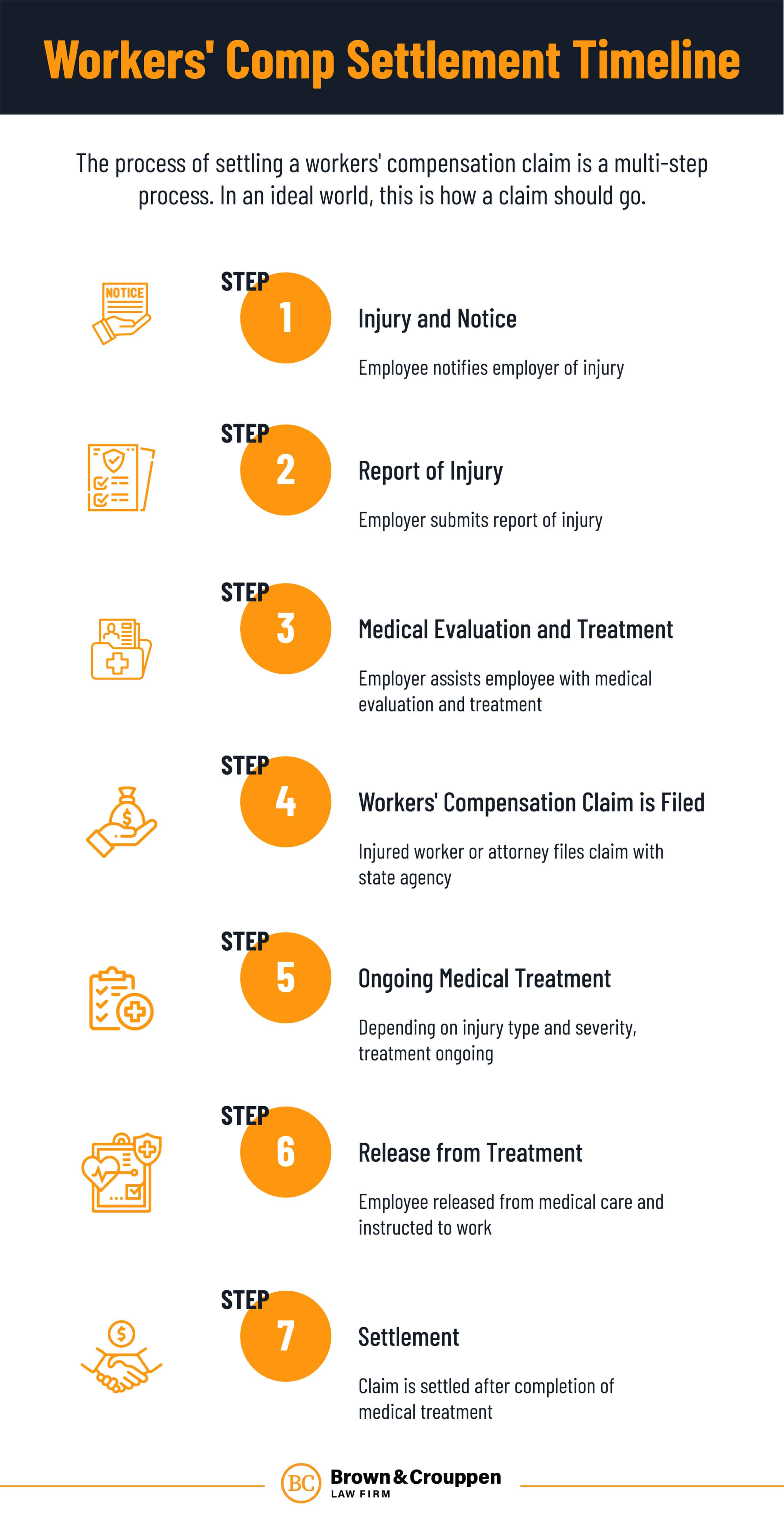
Workers’ comp cases go through a state agency, while personal injury cases get filed in civil court. That difference affects the paperwork, the decision-maker, the timeline, and the rules that control the case.
Workers' Comp Cases Go Through a State Agency
In Missouri, workers’ comp claims go through the Missouri Division of Workers’ Compensation. In Illinois, they go through the Illinois Workers’ Compensation Commission.
These cases don’t go to a jury. An administrative law judge or arbitrator decides disputed issues, and many cases move slowly until the medical record becomes clear.
Personal Injury Cases Go to Civil Court
Personal injury cases get filed in civil court. A judge oversees the case, and a jury may decide the outcome if the case goes to trial.
Missouri generally gives you five years to file a personal injury lawsuit, while Illinois usually allows you two years to file. Missing your deadline can end the case before anyone looks at the evidence.
The Benefits of Hiring a Lawyer After an Injury
A lawyer can protect your recovery after an injury by identifying every claim you may have, dealing with the insurance companies, and making sure one case doesn’t hurt the other.
A lawyer who handles both workers’ comp and personal injury claims can look at the whole accident, not just one piece of it.
Key benefits include:
- Finding Every Available Claim: One accident can create more than one legal path, especially if you were hurt while working because of someone outside your employer.
- Finding Sources of Compensation: Some accidents create claims against multiple drivers, contractors, property owners, or other third parties.
- Coordinating Insurance Coverage: Workers’ comp, auto insurance, business liability coverage, and umbrella policies can overlap. Your lawyer can sort out which coverage applies.
- Managing Deadlines: Workers’ comp notice rules and personal injury filing deadlines can run at the same time, so both tracks need careful attention.
- Reducing Lien Problems: A workers’ comp insurer may seek reimbursement from a personal injury settlement, and your attorney can push to reduce that lien when the rules allow.
- Protecting Both Cases: Statements, medical records, settlement terms, and timing in one claim can affect the other if both cases are active.
FAQ for Workers' Compensation and Personal Injury Differences
You usually can’t sue your employer after a work injury in Missouri or Illinois. The workers’ comp system blocks most lawsuits against employers, since the trade-off is for faster, fault-free benefits. A few rare exceptions exist, such as cases where the employer acted intentionally.
Workers’ compensation cases don’t pay for pain and suffering. They pay for medical bills, part of your lost wages, and a permanent disability award. Pain and suffering money is one of the main reasons a third-party personal injury claim can be worth pursuing when available.
The workers’ comp insurer pays for approved medical care in a workers’ comp case. In a personal injury claim, the at-fault party’s insurance pays for medical bills, often after the case settles; health insurance may cover bills along the way.
Missouri usually gives five years to file a personal injury lawsuit, while Illinois usually gives two years. Workers’ comp has its own shorter deadlines, including a 30-day period to notify your employer in Missouri and a 45-day notice in Illinois.
Missing any of these can end a case, so an early call to a lawyer helps protect your options.
A workers’ comp claim can affect a personal injury case through a lien or subrogation. The workers’ comp insurer may ask to be paid back from the personal injury settlement for the benefits it has paid.
A lawyer often negotiates that lien down so more money stays with the injured worker.

Get started with a free consultation with one of our skilled Personal Injury Lawyers today.
Which Case Is Right for You?
A job-related injury can involve more than workers’ comp, and an injury away from work can raise questions about insurance, fault, and the compensation available. Since 1979, Brown & Crouppen, P.C. has helped Missouri and Illinois families sort through those questions, recovering more than $2 billion across workers’ comp and personal injury cases.
Call us today at (314) 501-9510 or reach out through the online contact form anytime, day or night.