
Home  Practice Areas Nursing Home Abuse & Neglect Attorneys
NURSING HOME ABUSE & NEGLECT ATTORNEYS
This page has been written, edited, and reviewed by a team of legal writers following our comprehensive editorial guidelines. This page was approved by Founding Partner, Terry Crouppen who has more than 45 years of legal experience as a personal injury attorney. Our last modified date shows when this page was last reviewed.
This page has been written, edited, and reviewed by a team of legal writers following our comprehensive editorial guidelines. This page was approved by Founding Partner, Terry Crouppen who has more than 45 years of legal experience as a personal injury attorney. Our last modified date shows when this page was last reviewed.
- Last Modified:
- August 25, 2026
Nursing home abuse refers to the physical abuse or emotional abuse of the elderly and other vulnerable adults that takes place in residential, long-term care facilities, nursing homes, or assisted living facilities. It is also sometimes referred to as institutional elder abuse, and in the worst cases, can result in the wrongful death of the patient. Caring for elderly family members is one of our most sacred duties as a society, yet many nursing home residents suffer personal injury and mistreatment from the very care facilities we entrust with their proper care.
If a loved one has been injured due to nursing home abuse or neglect, get help from a lawyer at Brown & Crouppen Law Firm. Request a free case evaluation by calling 800-536-4357 or find out if you have a case online. Our nursing home abuse lawyers have helped recover millions in compensation for our clients and work on a contingency fee basis, meaning there are no upfront costs or fees—we only get paid if you win.
- Understanding the Different Types of Nursing Home Abuse
- Warning Signs and Common Injuries of Elder Abuse or Neglect
- Understanding the Rights of Nursing Home Residents
- Nursing Home Regulations and Facility Responsibilities
- A Look at Recent Violations in Missouri Nursing Homes
- Latest Missouri Nursing Home News
- Nursing Home Abuse and Neglect Statistics
- What to Do if You Suspect Nursing Home Abuse or Neglect
- Get a Free Case Evaluation from a Nursing Home Abuse Attorney at Brown & Crouppen
- Read More
Understanding the Different Types of Nursing Home Abuse
According to the U.S. Code of Federal Regulations, abuse refers to “the willful infliction of injury, unreasonable confinement, intimidation, or punishment with resulting physical harm, pain, or mental anguish.” In nursing homes, this definition encompasses any intentional act or failure to act that results in harm to a resident’s health, safety, or dignity.
The most common forms of elder abuse that our nursing home abuse attorneys see are:
- Physical Abuse: Infliction of physical pain, which may result in bruising, scars, fractures, or other visible injuries.
- Psychological/Emotional Abuse: Demeaning statements, harassment, threats, humiliation, or intimidation by staff members that result in the patient experiencing anxiety, depression, or mood changes.
- Sexual Abuse: Unwanted or nonconsensual sexual contact by a staff member, resident, or nursing home visitor.
- Financial Abuse: Unauthorized use or theft of a resident’s money, property, or benefits. This often involves manipulating or deceiving a vulnerable resident for monetary gain.
- Neglect: Failure to provide adequate care, food, hydration, hygiene, medical treatment, or supervision.
Nursing home abuse cases are often referred to as “the hidden crime” for several reasons: it is frequently difficult to recognize, it can be concealed by nursing home staff, and the victims may be too frightened or incapacitated to communicate the neglect.
If you suspect a loved one has suffered abuse or neglect in a nursing home, Brown & Crouppen’s experienced attorneys can help investigate, prove negligence, and pursue full financial compensation on your family’s behalf.
Warning Signs and Common Injuries of Elder Abuse or Neglect
Recognizing warning signs of nursing home abuse or neglect can be the difference between continued harm and timely intervention. While some changes in mood or health can accompany aging, unexplained injuries, emotional withdrawal, or sudden financial changes often indicate a larger problem within the facility. Families should trust their instincts and, if something feels off, ask questions and begin documenting what they see.
Some of the most common indicators that your loved one may be suffering from abuse or neglect include:
- Bedsores: Painful sores, also known as pressure ulcers, that form when residents are left in the same position for too long.
- Bruises, Bleeding, or Unexplained Fractures: Frequent or unexplained injuries that indicate physical abuse or dangerous conditions in the facility. These can include bed rail injuries, nursing home falls, and broken bones.
- Dehydration, Malnutrition, or Rapid Weight Loss: Lack of adequate nutrition or fluids, causing serious medical complications.
- Emotional Withdrawal or Fearfulness: Anxiety, depression, and withdrawal may manifest in victims of emotional abuse or trauma.
- Unexplained Illnesses or Infections: Frequent infections, like urinary tract infections, MRSA or sepsis, resulting from unsanitary conditions, untreated wounds, or poor hygiene practices.
- Poor Personal Hygiene or Dirty Living Conditions: Soiled bedding, unkempt clothing, or unpleasant odors are common signs of neglect.
- Physical Pain or Visible Discomfort: If your loved one appears to be in pain, winces during movement, or flinches when touched, it could indicate physical mistreatment or untreated injuries.
- Unexplained Financial Problems: Missing funds, unpaid bills, or changes to financial accounts or property titles can point to financial exploitation.
- Sudden Legal or Estate Changes: Unexpected amendments to a power of attorney, will, or trust document may suggest coercion or manipulation by caregivers or facility staff.
Understanding the Rights of Nursing Home Residents
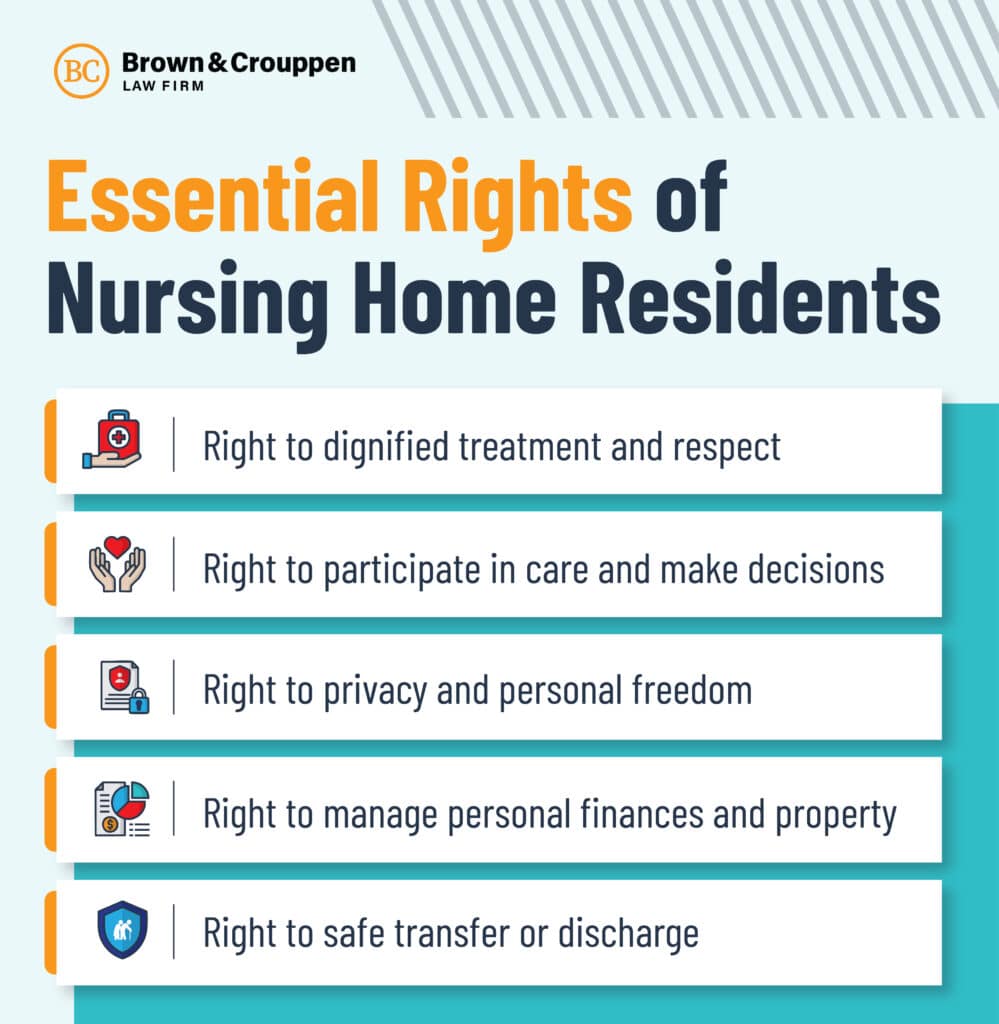
Every nursing home resident’s right to receive safe, respectful, and dignified care is protected by federal and state law. Under the Nursing Home Reform Act, 42 CFR §483.10–§483.15, residents have the right to:
- Dignity and privacy
- Freedom from abuse and neglect
- Participate in care decisions
- Access care information and medical records
- Grievance and complaint protection
In Missouri, these protections are reinforced by 19 CSR 30-88.010 and Chapter 198 of Missouri law, which require long-term care facilities to uphold residents’ rights and provide quality care.
If these rights are violated, residents and their families may have grounds to file complaints with state regulators and pursue a nursing home abuse claim with the help of an attorney.

Get started with a free consultation with one of our skilled Personal Injury Lawyers today.
Nursing Home Regulations and Facility Responsibilities
Both federal and state laws in Missouri require nursing homes to provide safe, dignified, and high-quality care. When facilities fail to meet these standards, they can be held legally accountable.
Under the Nursing Home Reform Act, 42 U.S.C. §1395i-3, all licensed facilities must:
- Protect residents from abuse, neglect, and exploitation according to §483.12
- Provide individualized care plans and proper medical supervision according to §483.21
- Maintain safe, sanitary conditions and adequate staffing according to §483.25 and §483.35
In addition to federal law, Missouri nursing homes must comply with state licensing regulations and enforcement standards. The Missouri Department of Health and Senior Services oversees facility licensure, inspections, and enforcement actions under Missouri nursing home regulations and state law. When facilities ignore these standards, they can face fines, loss of funding, and civil liability if residents are harmed.
A Look at Recent Violations in Missouri Nursing Homes
The scale of regulatory violations in the Missouri nursing home system highlights significant risks to residents. Of the 487 certified nursing homes in Missouri, 159 have been cited for serious deficiencies according to ProPublica. 457 facilities have infection-related deficiencies, and some of these homes have not been inspected for more than two years, despite federal law requiring regular surveys every nine to 15 months.
Notable violations in Missouri include:
- Bentwood Nursing & Rehab, with 50 total deficiencies since November 2019, 4 of which were infection-related, and at least $174,457 in fines since 2022.
- Arbor Hills Nursing and Rehabilitation Center, with 61 total deficiencies since July 2022 and $381,450 in fines in the last three years.
- Sylvia G. Thompson Residence Center, Inc., with 36 total reported deficiencies since August 2022, including six infection-related failures.
For families in Missouri, these numbers highlight why it is so important to monitor a loved one’s care closely and take action if you suspect neglect or abuse.
Latest Missouri Nursing Home News
Here are some recent, serious cases of nursing home abuse or negligence in Missouri:
- Festus Manor in Jefferson County lost its Medicare and Medicaid funding after regulators found the home failed to comply with required care standards. As a result, the facility’s agreement with the Missouri Department of Health and Senior Services was also terminated in November 2024.
- A 2022 investigation by KSHB TV found homes in Missouri under the federal Special Focus Facility program with severe violations, including prolonged resident wait times and the tragic incident of an 88-year-old woman who drowned in a bathtub.
- In March 2025, a 66-year-old man with dementia wandered out of a memory-care facility in Creve Coeur. While he was found safe, the incident highlights inadequate supervision and persistent safety concerns.
These incidents serve as reminders that even licensed facilities can fall short of basic safety standards, and families may need legal help to hold them accountable.
Nursing Home Abuse and Neglect Statistics
Understanding these statistics helps shed light on institutional abuse and neglect in nursing homes, reminding us of the widespread problems that impact vulnerable residents every day.
- The Centers for Disease Control reported 10% of older adults nationwide experiencing some form of abuse or neglect.
- According to the National Library of Medicine, 24.3% of family members reported seeing at least one instance of physical abuse.
- Missouri advocacy reports show 68 identified troubled nursing facilities where chronic understaffing, neglect, and financial misconduct placed more than 8,000 residents at risk.
- Missouri is ranked 48th in the country for nursing home quality.
What to Do if You Suspect Nursing Home Abuse or Neglect
If you believe your loved one is being mistreated in a nursing home, taking immediate action can protect their health and preserve vital evidence for a potential claim. Abuse and neglect can escalate quickly, so it’s important to act as soon as you notice warning signs, starting with these basic steps:
- Ensure the immediate safety of your loved one.
- Report the abuse to the authorities.
- File a complaint with state regulators or the Missouri Long-Term Care Ombudsman Program.
- Keep detailed records.
- Speak with an experienced nursing home abuse lawyer at Brown & Crouppen.
Get a Free Case Evaluation from a Nursing Home Abuse Attorney at Brown & Crouppen
At Brown & Crouppen, our attorneys share the same goal: to secure justice for individuals who have been injured. If a loved one has suffered injuries due to nursing home abuse in St. Louis, Kansas City, or the surrounding areas, get help from a lawyer at Brown & Crouppen Law Firm. Since 1979, our lawyers have recovered over $2 billion for clients, including settlements and verdicts from nursing home abuse cases.
Getting started with your case is easy. Call us at 800-536-4357 for a free consultation, or contact us online. And remember, there’s no upfront cost to you—if you don’t get paid, we don’t get paid.
Phone:
Hours:
Monday – Sunday: Open 24 hours
Phone:
Hours:
Monday – Sunday: Open 24 hours
Read More
FREE CASE EVALUATION
Our Results
TESTIMONIALS


- Last Modified:
- August 25, 2026
SCHEDULE A FREE CONSULTATION
