Home  Practice Areas Workers’ Compensation Lawyers Occupational Disease Lawyer
Occupational Disease Lawyer
This page has been written, edited, and reviewed by a team of legal writers following our comprehensive editorial guidelines. This page was approved by Founding Partner, Terry Crouppen who has more than 45 years of legal experience as a personal injury attorney. Our last modified date shows when this page was last reviewed.
This page has been written, edited, and reviewed by a team of legal writers following our comprehensive editorial guidelines. This page was approved by Founding Partner, Terry Crouppen who has more than 45 years of legal experience as a personal injury attorney. Our last modified date shows when this page was last reviewed.
- Last Modified:
- October 8, 2026
The biggest threat to your occupational disease claim is not the illness itself; it’s the calendar. Missouri and Illinois both put strict time limits on when you can report a work-related sickness, and those clocks often start ticking the moment a doctor connects your condition to your job.
The occupational disease lawyers at Brown & Crouppen, P.C. know how to lock in that date and protect your right to benefits before the deadline quietly closes the door. Insurance carriers know these rules better than most workers do, and they often argue that your symptoms came from something other than your job.
We’ll counter that move by lining up medical opinions, work history records, and exposure timelines that tie your illness directly to your job duties. Call (314) 501-9510 today or use our online contact form for a free consultation and lock in your rights now.
Why Choose Brown & Crouppen, P.C. for Your Occupational Disease Claim
Brown & Crouppen, P.C. is a legacy law firm, built on proven results and hard-earned trust. Recent workers’ compensation wins include a $860,000 settlement in Missouri and a $200,000 settlement in Illinois. Our team understands the industries that drive this region and the illnesses that come with them.
Deep Midwest Industrial Knowledge
We handle cases tied to manufacturing plants, rail yards, and chemical facilities across Missouri and Illinois. Our state-level familiarity helps us spot important exposure details and build your case around the work you actually did.
200+ Legal Professionals
Our 200+ legal professionals work as one team, with attorneys, nurses, and case managers all focused on moving your claim forward.
Ready From the Start
We prepare every case as if a judge will see it, even when most claims settle before that point. Carriers and employers take notice when they see a firm willing to go that extra mile for their clients.
Real Answers From People
Straight talk, steady updates. You’ll always know what’s coming next and why, so you can feel confident about every decision along the way.
If you’re ready to talk, call (314) 501-9510 or fill out our online contact form. We answer day or night, and the first conversation costs you nothing.

FREE CASE EVALUATION
Proving a Work-Related Illness in Missouri and Illinois
Proving a work-related illness means showing that your job duties or workplace conditions caused or helped cause your diagnosis. That standard sits at the heart of every occupational disease claim, and it requires a clear link between your exposure and your medical condition.
The strength of that link often decides whether you receive benefits or face a denial. Workers in the Metro East and along the I-44 corridor face exposures that build up slowly, sometimes over decades.
Heavy lifting in distribution centers can wear down shoulders and spines, while solvents in auto shops can damage lungs and nerves. Our occupational disease lawyers pull together your job history, medical records, and product exposure data to build a timeline that connects the dots.
A causation opinion from a qualified doctor anchors the case, and a strong one can support your claim. Without that opinion, the carrier may point to your age, lifestyle, or a pre-existing condition as the real cause.
We focus on the practical evidence that decides these claims:
- Work History Documentation: We collect personnel files, time cards, and safety logs that show how long and how often you faced the harmful exposure.
- Co-Worker Statements: Your attorney interviews people who worked beside you and can describe the same dust, fumes, noise, or repetitive tasks.
- Medical Causation Reports: When needed, we retain physicians who explain in plain language how your job duties triggered or worsened your condition.
- Product and Chemical Records: Your lawyer tracks down safety data sheets and manufacturer information for substances you handled on the job.
- Notice and Reporting Proof: We document when you first connected your illness to work, which protects your right to report and pursue the claim.
Brown & Crouppen, P.C. lines up the right medical experts and prepares the records before the insurance company has a chance to spin the story.
Types of Occupational Diseases Our Lawyers Handle
Our lawyers handle the full range of occupational diseases, from sudden chemical reactions to slow-developing illnesses that surface years after the last day of exposure. These conditions affect people who built their careers in factories, hospitals, construction sites, and offices across Missouri and Illinois.
Each illness needs a different strategy, and we tailor our approach to the science behind your specific diagnosis. Workers near the rail lines in Kansas City, the refineries in Wood River, or the construction zones along I-270 often face exposures that other firms may overlook.
The attorneys at Brown & Crouppen, P.C. see patterns in these industries because we’ve represented the people who keep them running. That experience helps us spot causes that a general practice firm might miss.
Respiratory and Lung Conditions
Lung diseases like silicosis, asbestosis, and occupational asthma often appear long after the harmful exposure ends. We work with pulmonologists who can review your imaging and link your breathing problems to specific job tasks.
These cases sometimes open the door to a third-party liability claim against the maker of the product that caused the damage.
Repetitive Motion and Musculoskeletal Injuries
Carpal tunnel syndrome, rotator cuff tears, and chronic back conditions develop from years of the same movements. Our occupational disease lawyers document the ergonomics of your workstation and the volume of work you completed each shift.
That evidence supports a claim for ongoing medical care and a fair permanent partial disability rating.
Hearing Loss and Tinnitus
Years of loud machinery, power tools, or industrial equipment can cause permanent hearing damage. We can pair audiology records with workplace noise studies to show the connection.
These claims sometimes qualify for benefits under the occupational disease schedule even when hearing aids partially restore the loss.
Chemical and Toxic Exposure Illnesses
Solvents, pesticides, heavy metals, and cleaning agents can cause cancers, nerve damage, and organ disease. We trace the chain of custody for these substances and identify every party who may be responsible.
A second claim against a chemical manufacturer can sit alongside your workers’ compensation case for greater recovery.

What Benefits Can You Pursue Through an Occupational Disease Claim?
An occupational disease claim can pursue several types of benefits. These may include medical care, wage replacement, permanent disability benefits, and other sources of compensation tied to your illness.
Missouri and Illinois both treat work-related illness similarly to workplace injury, but the proof requirements and benefit calculations can change the value of your claim.
We look at every available benefit so you don’t have to rely on the insurance company’s version of what your case is worth.
Common benefits may include:
- Medical Treatment: These benefits can cover care tied to your work-related illness, including doctor visits, testing, treatment, medication, and follow-up care.
- Temporary Total Disability Benefits: These benefits replace part of your wages while a doctor keeps you off work for treatment or recovery. Your average weekly wage affects that number. We’ll check the math to make sure an adjuster doesn’t shortchange you.
- Permanent Partial Disability Benefits: These benefits may apply once you reach Maximum Medical Improvement (MMI) and have a lasting impairment from your illness.
- Permanent Total Disability Benefits: These benefits may apply when your occupational disease prevents you from returning to any type of work.
- Wage Differential Benefits: These benefits may apply in Illinois if your illness forces you into lower-paying work.
Additional Benefits
Missouri’s Second Injury Fund may add benefits when a prior condition combines with your work illness and leaves you unable to work. Illinois has additional programs that may apply in specific situations, and we evaluate every available source so nothing gets missed.
How Do Insurers Push Back on Occupational Disease Claims?
Insurance companies often push back on occupational disease claims by questioning whether your job really caused your illness. They know these cases usually turn on medical causation, so they look for other explanations, such as age, genetics, smoking history, hobbies, or conditions outside work.
Our occupational disease lawyers watch for those arguments early and build the medical record around what actually happened. Insurers also use familiar tactics to limit what they pay. We’ll prepare you for their strategies and step in before they shape the claim unfairly.
Here’s how we beat common insurer arguments:
- Causation Challenges: Carriers may argue that something other than work caused your illness. We work with medical evidence and your treating physicians’ opinions to address those claims directly.
- Notice Disputes: Insurers may claim you waited too long to report the connection between your job and your diagnosis. Your lawyer documents when you first learned your illness could be work-related.
- Apportionment Arguments: Adjusters may try to divide your impairment between work and non-work causes to reduce benefits. Your attorney can respond with evidence that supports the full work-related portion of your claim.
- Surveillance and Social Media Monitoring: Investigators may watch your activity or review online posts for anything they can use against you. We’ll help you understand what to expect so you don’t get caught off guard.
- Lowball Settlement Offers: Carriers may offer a fast lump-sum settlement before the full value of your future medical care becomes clear. We calculate the long-term cost before advising you on whether an offer is fair.
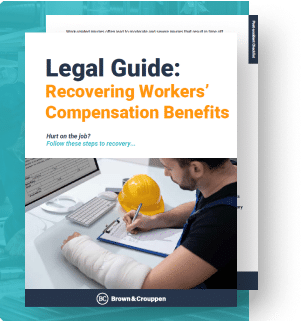
Use our guide to make a full recovery, understand the workers’ comp process, and learn about key legal considerations regarding your claim.
FAQ for Occupational Disease Lawyers
A denial doesn’t mean your case is over. Insurers deny occupational disease claims for many reasons, including disputes over what caused your illness, when you reported it, or whether your job exposed you to harmful conditions.
A lawyer can review the denial, strengthen the medical evidence, and help you challenge the insurer’s decision before important deadlines pass.
You can often file a workers’ comp claim long after your last day of work, because occupational diseases frequently appear years after the harmful exposure ends. The last exposure rule and discovery rules give workers a path forward when symptoms surface late.
Our occupational disease lawyers can review your work history and diagnosis date to figure out whether the time limits still work in your favor.
If your employer denies that your illness is work-related, you still have the right to file a claim and let a workers’ compensation judge or arbitrator decide. Employers and insurers often deny these claims at first because the medical link takes time to prove.
We’ll compile the medical and work history evidence needed to challenge that denial directly.
Missouri and Illinois both protect workers from retaliation for filing legitimate workers’ compensation claims, including those based on occupational disease. If your employer fires, demotes, or harasses you because of your claim, you may have a separate legal action against the company.
Our consultations are free, and we handle occupational disease claims on a contingency fee basis. That means no upfront fees, no hourly bills, and no attorney fees unless we win compensation for you.

Get started with a free consultation with one of our skilled Personal Injury Lawyers today.
Talk to Brown & Crouppen, P.C. Today
Justice is standing up for what’s right—for you—and is at the heart of everything we do. If your job made you sick, your rights deserve a strong defense. Brown & Crouppen, P.C. is ready to hear your story. We’ll walk you through your options and help you understand the next step with straight answers and steady support.
Call (314) 501-9510 or fill out our online contact form to start your free consultation. We’re available 24/7, and we’ll come to you at home, at the hospital, or wherever life has you.
FREE CASE EVALUATION
Our Results
TESTIMONIALS


- Last Modified:
- October 8, 2026
SCHEDULE A FREE CONSULTATION