
How Uber Insurance Coverage Works in Kansas City - and Why It Matters for Your Injury Claim
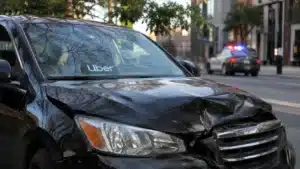
Uber insurance coverage in Kansas City depends on the driver’s app status when the crash occurred. When the app is off, the driver’s personal auto insurance generally applies. When the driver is online and waiting for a request, limited rideshare coverage applies. Once the driver accepts a ride, Uber-maintained liability coverage increases to $1 million per accident for covered claims.
Those distinctions can substantially affect an injury claim. But identifying a policy is only the beginning. The insurers may dispute which coverage period was active, a personal policy may exclude rideshare driving, and the injured person may have additional coverage through their own insurance.
This article focuses on Missouri law and explains how these issues affect Kansas City Uber injury claims, with a brief discussion of crashes involving the Kansas side of the metro.
The Three Coverage Periods - and Why the Driver’s App Status at the Time of the Crash Determines Everything
The same driver, in the same vehicle, may have different insurance available within a matter of minutes. The key is what the driver was doing through the app at the time of the collision.
| Driver’s App Status | Liability Coverage Generally Available in Missouri |
| App off | The driver’s personal auto liability policy; Uber’s rideshare coverage generally does not apply. |
| Online and available, with no ride accepted | At least $50,000 for bodily injury or death per person, $100,000 per accident, and $25,000 for property damage. |
| Ride accepted, traveling to pickup, or transporting a passenger | At least $1 million per accident. Uber’s Missouri insurance certificate lists a combined single liability limit. |
The table summarizes liability coverage for losses the insured driver is legally responsible for causing. The listed limits do not guarantee payment, and liability coverage is separate from uninsured and underinsured motorist coverage.
App Off: The Driver’s Personal Insurance Generally Applies
When the Uber app is off, the driver is not operating under Missouri’s rideshare insurance
requirements. Uber states that personal auto insurance applies while the driver is offline.
A crash during this period is generally handled like another automobile accident. If the driver
causes the collision, the injured person looks to the driver’s personal liability policy.
The fact that someone drives for Uber does not make Uber’s commercial coverage applicable
every time that person gets behind the wheel. An Uber decal or evidence of completed rides
earlier that day does not establish that rideshare coverage was active when the crash
occurred.
Ride Accepted: Uber’s $1 Million Liability Coverage
Under RSMo. § 379.1702.3, at least $1 million in primary automobile liability insurance must
be maintained during a prearranged ride. Uber’s Missouri insurance certificate lists a $1
million combined single limit after the driver records acceptance of a request, including
travel to pick up the passenger and transportation to the destination.
The passenger does not have to be inside the vehicle before that coverage begins. If the
driver has accepted a request and causes a crash while traveling to the pickup location, the
accepted-ride coverage can apply.
The $1 million limit is per accident, not per injured person. As a combined single liability
limit, it may have to cover multiple people’s bodily injury claims and covered property
damage arising from that collision.
It also does not make every Uber accident claim worth $1 million. An injured person must
still establish legal responsibility, causation, injuries, and resulting losses. A higher policy
limit increases the insurance potentially available to pay those losses; it does not establish
the value of the claim.
In practice, the police report often does not resolve which coverage period was active. It
may identify the vehicle as an Uber without showing whether the driver was offline, waiting
for a request, traveling to a pickup, or already transporting a passenger. That question may
have to be answered by comparing several sources of information, including trip receipts,
screenshots, ride-acceptance or cancellation timestamps, GPS information, and records
maintained by Uber. In a close case, the timing can matter significantly. A collision that
occurs shortly before a ride is accepted may fall under the lower liability limits, while a
collision just moments after a ride is accepted may fall within the $1 million coverage limits.
Establishing the correct limits therefore means reconstructing the sequence of events from
objective evidence rather than relying only on what the driver or an insurer says happened
after the fact.
What Changes When a Kansas City Ride Crosses the State Line?
Kansas has its own rideshare insurance statute, K.S.A. 8-2708. Uber’s Kansas insurance
certificate for March 2026 through March 2027 shows the same basic waiting-period and
accepted-ride liability limits described above, but it also includes personal injury protection,
or PIP, as described in the policy.
Matching liability limits do not mean Missouri and Kansas claims work identically. The crash
location, applicable state law, and policies in effect on the accident date all need to be
reviewed. A Missouri coverage summary should not be treated as a complete answer for a
Kansas crash.
Where Coverage Gaps and Disputes Actually Arise
Missouri law includes protections to keep required rideshare coverage from disappearing
simply because the driver’s personal policy excludes the activity. Nevertheless, insurers may
disagree about which policy should respond while the injured person faces medical bills, lost
wages, and vehicle repairs.
When Uber’s Insurer and the Driver’s Personal Insurer Both Deny the Claim
A coverage dispute can begin even when there is little disagreement about who caused the
crash. The personal insurer may assert a rideshare exclusion. Uber’s insurer may question
whether the driver was logged in, available for requests, or already engaged in an accepted
ride.
Under RSMo. § 379.1702.4, if the driver’s insurance has lapsed or does not provide the
required rideshare coverage, the transportation network company’s insurance must provide
that coverage beginning with the first dollar of the claim. If the driver’s insurance applies
but is insufficient to meet the statutory minimum, the company must provide excess
coverage up to the required limits.
RSMo. § 379.1702.5 also provides that company-maintained coverage cannot depend on the
personal insurer first denying the claim. A personal-policy denial is not a prerequisite for
the required rideshare coverage.
These protections do not eliminate questions about app status, fault, or the extent of the
injuries. They do provide a basis to challenge an attempt to withhold required coverage
solely because the personal carrier has not acted.
Why the Driver’s Personal Policy May Exclude Rideshare Activity
Personal automobile insurance is generally written for personal use. RSMo. § 379.1708 allows
insurers to exclude coverage while a driver is logged into a rideshare network or providing
a prearranged ride. These exclusions may affect liability, UM/UIM, medical payments, and
damage to the driver’s own vehicle.
A rideshare endorsement may change what the personal policy covers, and a denial under
one policy does not establish that every other policy excludes the loss. A complete review
therefore requires the policy and endorsements, not just the insurance card exchanged at
the scene.
What Happens to Victims While Coverage Is Being Disputed
Resolving a coverage dispute requires separating two questions: who is legally responsible
for the crash, and which policy covers that responsibility? Answering the second question
may require reviewing personal and commercial policies, app-status records, trip data, and
each insurer’s written explanation for accepting or rejecting coverage.
Meanwhile, finding liability coverage does not necessarily mean an insurer will pay medical
bills as they arrive. Liability claims often resolve through a settlement or judgment. Available
health insurance or applicable medical payments coverage may help address treatment costs
while the injury claim proceeds, subject to their terms and any reimbursement obligations.
The Independent Contractor Question - and What It Means for Your Claim
App status helps determine what insurance is available. It does not, by itself, establish
whether Uber can be held legally responsible for the injury.
Uber generally treats its drivers as independent contractors rather than employees. That
classification can affect a claim seeking to hold the company responsible for a driver’s
negligence. It does not eliminate the insurance maintained for covered rideshare activity or
automatically shield Uber from responsibility for its own conduct.
Why Uber’s $1 Million Policy Is Not the Same as Uber Being Liable
For example, if an Uber driver causes a collision by speeding, following too closely, or
running a red light, the negligence claim may be against the driver, with Uber-maintained
commercial insurance available to pay a covered claim. The injured person does not
necessarily need to prove that Uber separately acted negligently to access that coverage.
Liability asks who is legally responsible for the harm. Coverage asks whether an insurance
policy applies to that liability. A direct claim against Uber raises an additional question: does
the company’s own conduct provide a legally recognized basis for holding it responsible for
the injury?
When Direct Liability Against Uber Is and Isn’t Available
A direct claim requires more than showing that someone used the app. The alleged conduct
must support a legal claim and be connected to the injury. A recent Missouri case illustrates
both the potential for a claim against a rideshare company and its limits.
In Ameer v. Lyft, Inc., a Lyft driver was shot and killed during an attempted carjacking in St.
Louis. According to his mother’s lawsuit, minors used a false name, false email address, and
anonymous payment method to request the ride. Lyft’s app then connected the driver with
the people involved in the scheme.
His mother alleged that Lyft knew or should have known about similar attacks involving
fraudulent ride requests. She also alleged that Lyft failed to provide adequate safety training
and failed to use identity verification and anti-fraud measures that it had implemented in
other states.
The trial court dismissed the claims against Lyft, but the Missouri Court of Appeals reversed.
The appellate court reached two significant conclusions. First, the allegations were
sufficient to treat the app as a product and pursue claims that defects in its design
contributed to the death. Second, the alleged known risks, Lyft’s connection of the driver
with the perpetrators, and its alleged safety failures supported a duty to take precautions
against the attack.
The court allowed the product-liability and negligence claims to proceed. It did not find that
the allegations had been proven or that Lyft owed damages. The significance is that the
lawsuit identified specific alleged failures by Lyft itself that could support a claim against the
company. Ameer v. Lyft, Inc., 711 S.W.3d 534 (Mo. App. E.D. 2025).
This decision shows why the company’s specific role matters. In Ameer, the allegations
connected Lyft’s app and safety practices to a danger encountered through its own service.
For an ordinary traffic collision, the investigation begins with who caused the crash and
which policies cover that conduct. If the evidence also points to a legally actionable failure
by Uber itself, that potential claim requires separate investigation.
One Coverage Layer Most Kansas City Victims Don’t Know About
The insurance covering the Uber driver or another at-fault motorist may not be the only
source of recovery. An injured passenger may have coverage through a personal or
household auto policy even though their own vehicle was nowhere near the accident.
Your Own UM/UIM Policy May Apply - Even in Someone Else’s Uber
Uninsured motorist coverage, or UM, generally protects an insured person injured by a
driver with no applicable liability insurance. Missouri generally requires UM coverage in
personal auto policies under RSMo. § 379.203. Depending on the policy’s definition of an
insured and other terms, a passenger’s UM coverage may follow them into an Uber.
Underinsured motorist coverage, or UIM, can address losses caused by a driver whose
liability coverage is insufficient. Missouri does not generally require personal auto policies
to include UIM. Whether it applies depends heavily on the policy language.
Medical bills exceeding the at-fault driver’s liability limits do not automatically trigger UIM
benefits. The policy may define an underinsured vehicle by comparing insurance limits, and
it may contain offsets or other restrictions. That distinction can determine whether UIM is
available at all.
Uber’s Missouri insurance certificate also lists $25,000 per person and $50,000 per accident
in UM/UIM coverage during an accepted ride. Those limits are separate from the $1 million
liability limit. If an uninsured motorist causes the crash, the existence of Uber’s larger
liability policy does not automatically make that amount available for the passenger’s UM
claim.
How Attorney Representation Affects What You Actually Recover
Identifying the correct Uber policy is only part of the work. A claim also requires evidence
of who caused the collision, how the injuries affect the person’s life, and what losses should
be included before the case is resolved.
Why Uber's Claims Process Is Not Designed to Maximize Your Recovery
An insurer handling an Uber claim evaluates what it owes under its policy. You should not
assume that the adjuster will also identify every other policy that might benefit you or
develop your damages claim for you.
An attorney can review the driver’s personal policy, Uber-maintained coverage, another atfault
driver’s insurance, and applicable personal or household coverage together. Medical
records, wage information, and evidence of future treatment needs also help document the
full loss, including pain and the effects of lasting limitations.
Preserving Evidence That Proves Which Period Was Active
Useful records include the trip receipt, screenshots, the times a ride was requested and
accepted, pickup details, cancellation records, messages, GPS data, and Uber’s records
showing when the driver logged in and out. Together, those records can establish which
coverage period was active at the moment of impact.
RSMo. § 379.1708.6 requires transportation network companies and relevant insurers to
cooperate in a coverage investigation. That includes sharing available coverage information
and the precise times the driver logged on and off during the 12 hours immediately before
and after the accident. This is an information-sharing requirement among the company and
insurers; it is not an automatic right for an injured person to receive every internal record.
Passengers can preserve receipts, screenshots, and messages still available in their app. An
attorney can send preservation requests identifying relevant trip, account, location, and
app-status records. A preservation request does not automatically require Uber to produce
those materials. If litigation becomes necessary, some records may need to be obtained
through formal discovery.
Preserving the evidence early helps support a coverage decision based on objective records
rather than competing recollections of what happened.
Talk to a Kansas City Uber Accident Attorney About Your Case
An Uber accident claim can involve several insurers and different coverage limits, even
before questions arise about the severity of the injuries. Understanding how those policies
fit together can help identify the available paths to compensation.
Brown & Crouppen’s Kansas City Uber accident lawyers can investigate the collision, seek to
preserve app and trip records, identify potentially applicable policies, and address coverage
disputes. We can also evaluate whether the evidence supports a claim against the driver,
Uber itself, or another responsible party.
Getting started with your case is easy, and there are no upfront costs to work with us. Call
us at (888) 609-4973 or contact us online to schedule your free consultation.
Frequently Asked Questions
Does Uber's $1 million insurance policy always apply after an accident in Kansas City?
No. Uber’s $1 million liability coverage generally applies after a driver accepts a ride,
including travel to the pickup location. Lower limits apply while the driver is online and
waiting for a request. When the app is off, the driver’s personal auto insurance generally
applies. Coverage availability also does not guarantee that a particular claim will be paid.
What if the Uber driver's app was on but they hadn't accepted a ride yet — am I covered?
Missouri requires insurance during that stage: at least $50,000 in bodily injury liability
coverage per person, $100,000 per accident, and $25,000 for property damage, along with
required UM coverage. Whether a policy pays your injury claim depends on fault, the
applicable coverage, and the circumstances of the crash.
Can I use my own insurance after an Uber accident in Missouri?
Potentially. Your UM coverage may apply while you are riding in someone else’s Uber. UIM
or medical payments coverage, often called MedPay, may also be available, depending on
your policy. Reviewing personal and household policies can identify coverage beyond the
insurance carried by the drivers involved.